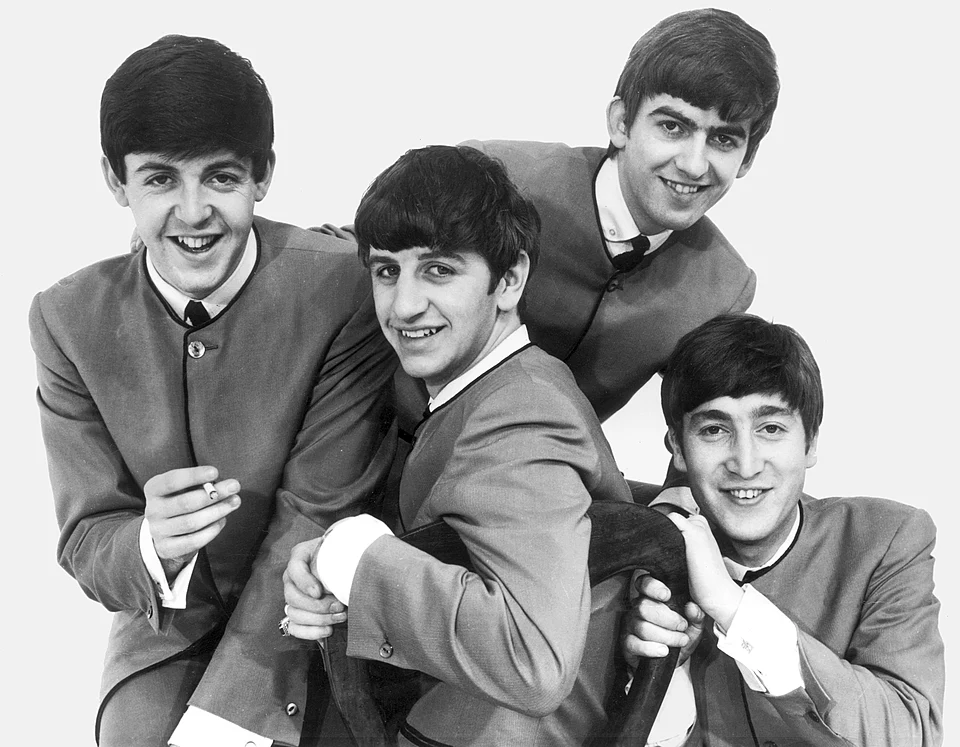
By February 13, 1964, The Beatles’ arrival in the United States had moved beyond television excitement and into measurable commercial dominance. Just days after their first appearance on American television, the band’s record sales, chart positions and media presence confirmed that something historic was unfolding.
The group had arrived in New York on February 7, 1964, greeted by thousands of fans at JFK Airport. Two days later, they performed on The Ed Sullivan Show, a broadcast watched by an estimated 73 million viewers. Details surrounding that first US visit are documented in historical summaries such as The Beatles’ American visit, which outline the scale of public reaction and media coverage.
The immediate commercial impact was tied to “I Want to Hold Your Hand.” The single had been released in the United States on December 26, 1963, by Capitol Records. By early February 1964, it had climbed to number one on the Billboard Hot 100. According to Billboard’s official Beatles chart history, the song remained at the top of the US chart for seven consecutive weeks.
By February 13, record stores across major American cities were reporting shortages. Capitol Records had to press additional copies rapidly to meet demand. Industry reports at the time described daily sales in the hundreds of thousands. Radio stations increased rotation, and the single became unavoidable on American airwaves.
Musically, “I Want to Hold Your Hand” represented a refined pop structure. Written by John Lennon and Paul McCartney, the song combined tight vocal harmonies with a driving backbeat and concise melodic hooks. The production, overseen by George Martin at EMI Studios in London, balanced clarity and energy. Its accessible lyrical theme, direct and uncomplicated, allowed it to cross generational boundaries.
The song’s US success marked a turning point for Capitol Records. Prior to late 1963, Capitol had shown hesitation in heavily promoting British acts. However, once early radio demand became clear, the label launched an aggressive marketing campaign that included national advertising and prominent in store displays. That decision proved decisive.
The events of February 1964 did not stop at one single. Within weeks, additional Beatles songs entered the American charts. On April 4, 1964, The Beatles achieved an unprecedented milestone by holding the top five positions on the Billboard Hot 100 simultaneously. Billboard documents that achievement in its historical coverage of the chart. The February 13 sales surge stands as a key moment leading into that dominance.
Culturally, the American response was intense. Newspapers reported scenes of crowds gathering outside hotels and television studios. Police were deployed to manage fan numbers during the band’s movements between appearances. The term “Beatlemania,” already used in Britain, quickly became part of American headlines.
The influence extended beyond record sales. Concert promoters realized that Beatles performances could fill larger venues than previously anticipated for a foreign act. The economics of touring began to shift. Larger arenas, stronger security measures and expanded merchandising followed in the months ahead.
The February breakthrough also triggered what historians now describe as the British Invasion. Following The Beatles’ success, American labels began signing and promoting other British groups. Acts such as The Rolling Stones, The Dave Clark Five and The Animals soon followed into the US charts. Retrospectives on the British Invasion are widely documented, including overview material available through Rolling Stone’s Beatles coverage and other music history archives.
From an industry perspective, February 13 represents the consolidation phase of The Beatles’ American breakthrough. The television exposure on February 9 created the spark. The sustained chart dominance confirmed that it was not temporary hype. Retail data, radio rotation and audience demand aligned in a way rarely seen before in popular music.
The success of “I Want to Hold Your Hand” also marked the beginning of a shift in pop songwriting expectations. The Lennon and McCartney partnership demonstrated that concise, hook driven compositions could maintain artistic identity while achieving mass appeal. The production standards established during this period would influence studio techniques throughout the remainder of the decade.
In historical context, February 1964 stands as one of the most transformative months in modern pop culture. American youth culture embraced a British band at a scale that redefined international music exchange. The shift was not gradual. It was immediate, measurable and commercially decisive.
By February 13, 1964, it was clear that The Beatles were no longer simply a successful British act. They were a dominant force in the American market, reshaping chart dynamics, industry economics and cultural conversation in real time.
For more daily milestones in music history, explore our On This Day archive.
Dive deeper into legendary recording sessions and artist turning points inside The Vault.
Stay updated with breaking developments and current headlines in Music Industry News.
Or return to the main Behind The Melody Home Page to browse the full archive.
About the Author