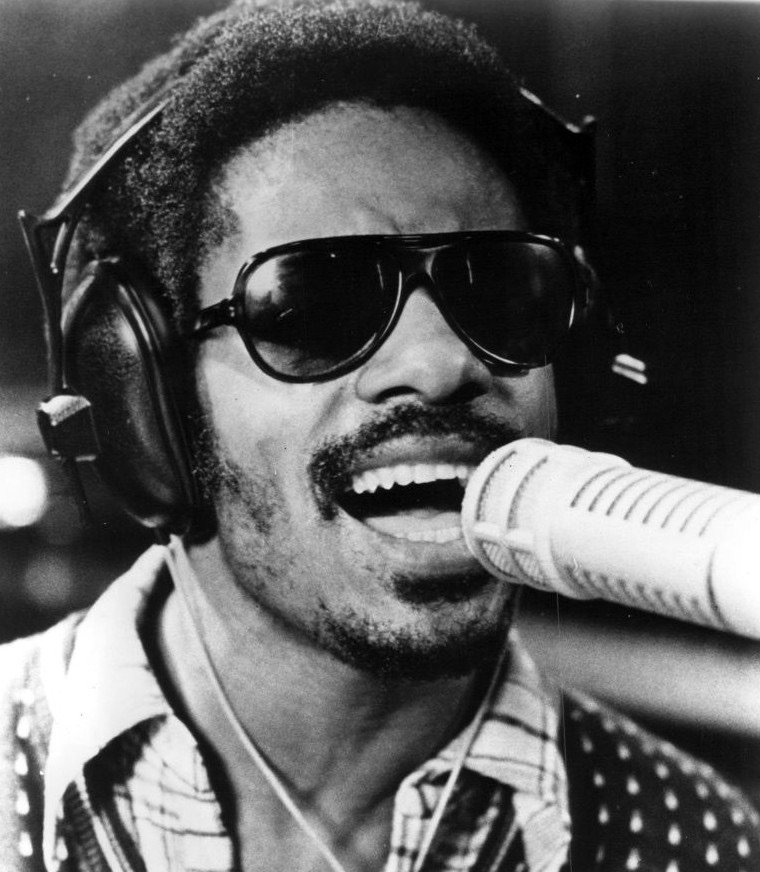
On September 28, 1976, Stevie Wonder released an album that would become one of the defining records of his career.
Songs in the Key of Life was not a conventional album.
It arrived as a sprawling double LP accompanied by an additional four-song EP, covering childhood, love, faith, poverty, racism, politics, family and the history of Black music.
Wonder had already enjoyed an extraordinary run with Talking Book, Innervisions and Fulfillingness’ First Finale.
Then came Songs in the Key of Life.
Released exactly 50 years ago today, the album produced songs including “Sir Duke”, “I Wish”, “Isn’t She Lovely”, “Pastime Paradise” and “As”.
It would win the Grammy for Album of the Year, eventually receive Diamond certification in the United States and be selected for preservation in America’s National Recording Registry.
Half a century later, Stevie Wonder is marking the anniversary by returning to the music on stage.
September 28, 1976: Songs in the Key of Life arrives
Stevie Wonder was 26 years old when Songs in the Key of Life was released.
By then, he had already been recording for Motown for more than a decade.
His early success as “Little Stevie Wonder” had developed into something far more significant during the 1970s.
Wonder gained greater creative control over his work and began producing a remarkable sequence of albums.
Music of My Mind and Talking Book arrived in 1972.
Innervisions followed in 1973.
Then came Fulfillingness’ First Finale in 1974.
The latter two both won Grammy Awards for Album of the Year.
Wonder then took considerably longer over his next project.
According to the Library of Congress, Wonder and his musicians worked on Songs in the Key of Life for around two years, sometimes undertaking studio sessions lasting as long as 48 hours.
The scale of the finished record reflected that effort.
It was much bigger than a normal album
The original Songs in the Key of Life contained two LPs.
But even that wasn’t enough.
Purchasers also received a seven-inch EP titled A Something’s Extra, containing four additional songs.
Across the complete project, Wonder presented 21 tracks.
The main album included “Love’s in Need of Love Today”, “Village Ghetto Land”, “Sir Duke”, “I Wish”, “Knocks Me Off My Feet”, “Pastime Paradise”, “Summer Soft”, “Isn’t She Lovely”, “Joy Inside My Tears”, “Black Man”, “Ngiculela – Es Una Historia – I Am Singing”, “If It’s Magic”, “As” and “Another Star”.
The additional EP included “Saturn”, “Ebony Eyes”, “All Day Sucker” and “Easy Goin’ Evening (My Mama’s Call)”.
There was also the instrumental “Contusion”.
Rather than concentrating on one sound or subject, Wonder used the project to explore an enormous range of ideas.
Jazz, funk, soul, gospel, pop and R&B appeared across the record.
The subjects were equally broad.
“Isn’t She Lovely” came from becoming a father
One of the album’s most enduring recordings was deeply personal.
“Isn’t She Lovely” celebrated the birth of Wonder’s daughter, Aisha Morris.
The recording famously includes the sound of a baby, giving the track an intimacy very different from a traditional pop single.
Despite becoming one of Stevie Wonder’s most recognisable songs, “Isn’t She Lovely” was not originally issued as a commercial single in the United States.
Its reputation grew through the album itself and extensive radio play.
It is one example of just how deep Songs in the Key of Life was.
The album didn’t rely only on its singles.
Some of its best-known songs became standards in their own right.
“Sir Duke” celebrated the musicians who came before him
Another of the album’s defining songs was “Sir Duke”.
Wonder wrote it as a tribute to Duke Ellington, who had died in 1974.
But the song reaches beyond Ellington.
Wonder also references major figures including Count Basie, Glenn Miller, Louis Armstrong and Ella Fitzgerald.
The Library of Congress specifically highlights “Sir Duke” as an acknowledgement of Wonder’s debt to the African-American musical tradition.
The song also became a major commercial hit.
Its instantly recognisable horn arrangement and celebration of music helped turn “Sir Duke” into one of Wonder’s signature recordings.
Listen to Stevie Wonder’s “Sir Duke”
This is the official recording provided by Universal Music Group through Stevie Wonder’s Official Artist Channel on YouTube.
“I Wish” looked back at Wonder’s childhood
“I Wish” approached the past from a different direction.
Rather than celebrating famous musicians, Wonder looked back at his own childhood.
The song combines nostalgic lyrics with one of the album’s most recognisable bass-driven arrangements.
“I Wish” became another major hit from the album and later earned Wonder the Grammy for Best R&B Vocal Performance, Male.
The recording also demonstrated one of the central strengths of Songs in the Key of Life.
Wonder could deal with serious subjects across the album without abandoning rhythm, melody or accessibility.
A song about childhood memories could sit alongside material dealing with inequality, religion and racial history.
The album was also deeply political
Not everything on Songs in the Key of Life was celebratory.
“Village Ghetto Land” addressed poverty and inequality.
“Black Man” examined racial history and the contributions made by people from different backgrounds to American society.
“Pastime Paradise” dealt with people looking backwards towards an imagined better past rather than confronting the realities of the present.
Decades later, another generation would become familiar with part of “Pastime Paradise” through Coolio’s “Gangsta’s Paradise”.
Wonder’s original recording provided the musical foundation for Coolio’s 1995 hit.
But within Songs in the Key of Life, “Pastime Paradise” was part of something much larger.
Wonder was examining society from multiple directions while also writing some of the most accessible music of his career.
An extraordinary group of musicians contributed
Although Stevie Wonder was capable of playing numerous instruments himself, Songs in the Key of Life was far from a one-man recording.
The Library of Congress identifies contributors including bassist Nathan Watts, drummer Raymond Pounds, keyboardist Greg Phillinganes and guitarists Ben Bridges and Michael Sembello.
Jazz pianist Herbie Hancock also appeared on the album.
The recording process stretched across approximately two years.
The Library of Congress notes that some sessions could continue for extraordinary lengths of time as Wonder pursued the enormous project.
That intensity produced an album that was unusually broad even by the ambitious standards of 1970s popular music.
America immediately embraced it
After the long wait, the commercial response was enormous.
Songs in the Key of Life entered the American album chart at Number 1.
That was an exceptional achievement in the 1970s, when albums generally needed time to climb the chart after release.
The album remained at the top for weeks and became one of the biggest releases of Wonder’s career.
In Britain, the album also became his highest-charting studio album.
The Official Charts Company records a peak of Number 2 on the UK Albums Chart.
It spent 19 weeks inside the UK Top 10 and 62 weeks inside the Top 100 across its chart runs.
For an expansive double album with an additional EP, the commercial performance demonstrated the level of interest surrounding Stevie Wonder by 1976.
Then came the Grammys
The following year, Songs in the Key of Life received one of the industry’s biggest honours.
At the 19th Annual Grammy Awards in 1977, it won Album of the Year.
According to the Recording Academy, Wonder also won Best Pop Vocal Performance, Male for the album, while “I Wish” won Best R&B Vocal Performance, Male.
The project helped Wonder collect five Grammy wins connected with that period, including Producer of the Year, Non-Classical.
The Album of the Year victory was particularly remarkable.
It was Wonder’s third Album of the Year Grammy in four years.
Innervisions had won for 1973.
Fulfillingness’ First Finale won for 1974.
Then Songs in the Key of Life won for 1976.
The Recording Academy notes the extraordinary nature of that run.
Wonder was still only in his twenties.
The album eventually went Diamond
Its commercial life didn’t end in the 1970s.
In 2005, Songs in the Key of Life received 10-times multi-Platinum certification from the Recording Industry Association of America.
The RIAA highlighted 2005 as Stevie Wonder’s “Diamond Year”, recognising the album’s 10-times multi-Platinum status.
That placed the record among the relatively small group of albums to achieve Diamond-level certification in the United States.
By then, however, its importance had moved well beyond sales.
The Library of Congress preserves the album
Also in 2005, Songs in the Key of Life was selected for America’s National Recording Registry.
The registry is maintained by the Library of Congress and preserves recordings considered culturally, historically or aesthetically significant.
The Library of Congress describes the album as one of the recordings selected because of its importance to American life and culture.
The recognition placed Wonder’s album alongside recordings from across American musical and broadcasting history that have been chosen for long-term preservation.
Nearly three decades after its release, Songs in the Key of Life had moved from successful album to recognised piece of cultural history.
Its influence continued into later generations
The album’s influence can be heard far beyond Stevie Wonder’s own catalogue.
“Pastime Paradise” became central to “Gangsta’s Paradise”.
“Isn’t She Lovely” became a standard performed by countless musicians.
“Sir Duke” remains one of Wonder’s most immediately recognisable recordings.
“As” has been repeatedly covered and reinterpreted.
The musicianship across the record has also made it a reference point for generations of singers, producers, keyboard players, bassists and songwriters.
Its importance is partly explained by the sheer range of the album.
There isn’t one single version of Stevie Wonder on Songs in the Key of Life.
There is the pop songwriter.
The funk musician.
The producer.
The political writer.
The romantic.
The father.
The musician paying tribute to those who came before him.
And the artist experimenting with what a major pop album could contain.
Fifty years later, Stevie Wonder is returning to the album
The anniversary has now brought the record back into focus once again.
In 2026, Stevie Wonder announced Songs in the Key of Life Performances – 50th Anniversary Tour, including dates in Britain.
According to the Official Charts Company, the UK dates include Birmingham on October 13, London on November 3, Manchester on November 8 and Glasgow on November 11.
It means the man who created the album at 26 is celebrating it on stage half a century later.
That gives today’s anniversary an unusual significance.
This isn’t simply a historical album reaching a round number.
Its creator is still here to celebrate it.
Fifty years of Songs in the Key of Life
On September 28, 1976, Stevie Wonder released an album with an extraordinary amount of music and an equally ambitious title.
Songs in the Key of Life attempted to deal with exactly what its name suggested.
Life.
Childhood.
Parenthood.
Love.
Faith.
Race.
Poverty.
History.
Music itself.
The result reached Number 1 in America, Number 2 in Britain, won Album of the Year, achieved Diamond certification and was eventually selected for preservation by the Library of Congress.
The album was the culmination of one of the most remarkable creative periods any major recording artist experienced during the 1970s.
Wonder had already made Talking Book, Innervisions and Fulfillingness’ First Finale.
Then he spent approximately two years creating something even larger.
Fifty years later, the songs remain part of popular culture.
And Stevie Wonder is still performing them.
On this day in 1976, Songs in the Key of Life was released.
Half a century later, it remains one of the records that defines Stevie Wonder’s extraordinary career.
For more daily milestones in music history, explore our On This Day archive.
Dive deeper into legendary recording sessions and artist turning points inside The Vault.
Stay updated with breaking developments and current headlines in Music Industry News.
Or return to the main Behind The Melody Home Page to browse the full archive.
Follow Behind The Melody
YouTube: @behindthemelodybtm
TikTok: @behindthemelody
Instagram: @behindthemelody_
Facebook: @btmbehindthemelody
About the Author