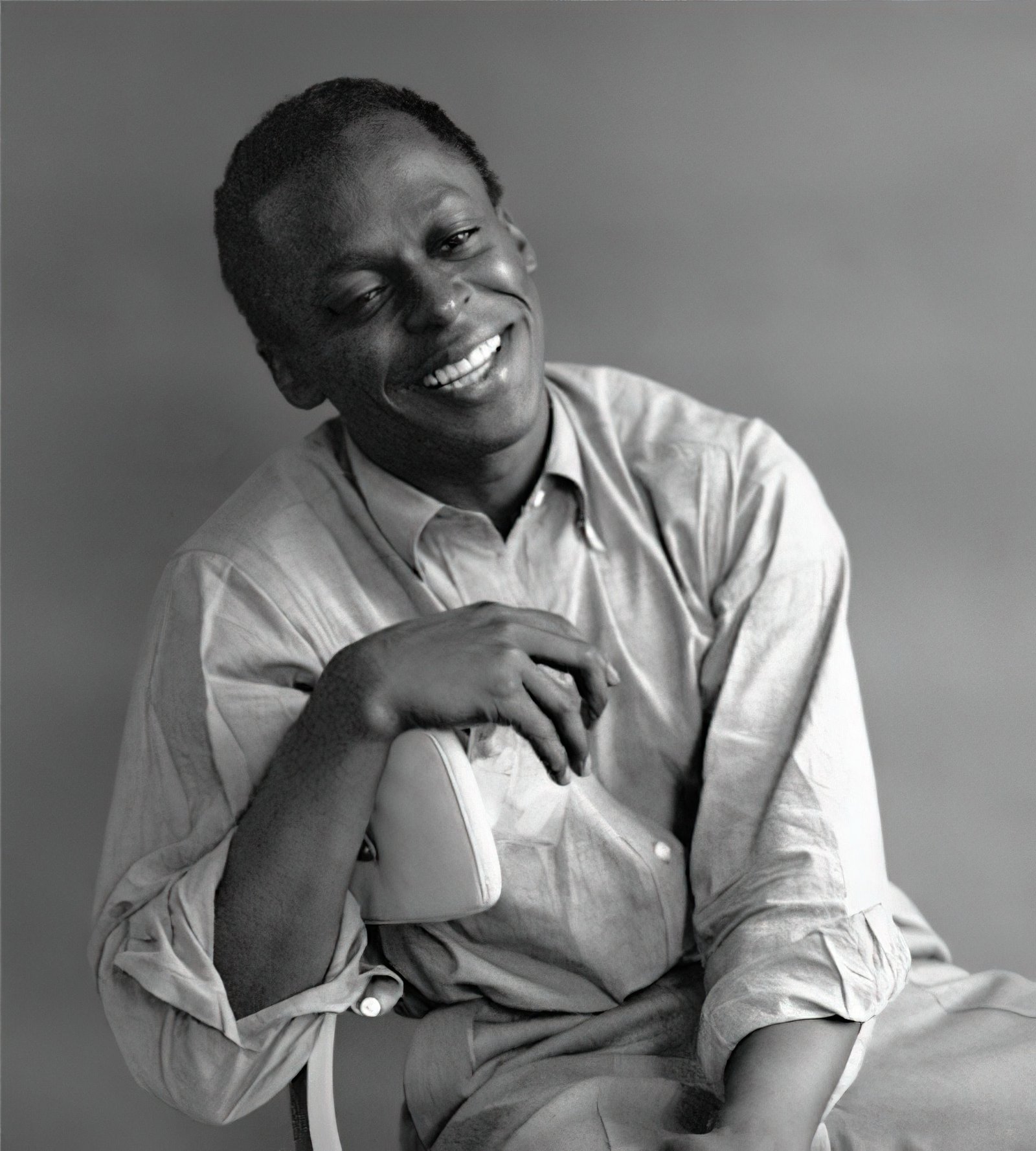
On September 28, 1991, the music world lost Miles Davis.
He was 65 years old.
Calling Davis simply a jazz trumpeter barely describes what happened during his career. Over several decades, he repeatedly changed direction, assembled extraordinary groups of musicians and helped push jazz through bebop, cool jazz, modal jazz, post-bop and eventually electric fusion.
When one musical movement became comfortable, Davis often seemed determined to leave it behind.
His catalogue includes Birth of the Cool, ’Round About Midnight, Miles Ahead, Milestones, Kind of Blue, Sketches of Spain, In a Silent Way and Bitches Brew.
And the musicians who passed through his groups included John Coltrane, Cannonball Adderley, Bill Evans, Herbie Hancock, Wayne Shorter, Chick Corea, Tony Williams, Ron Carter and John McLaughlin.
More than three decades after his death, Miles Davis remains one of the central figures in the history of jazz.
September 28, 1991: Miles Davis dies aged 65
Miles Davis died on September 28, 1991, in Santa Monica, California.
His death came only months after one of the most unusual performances of his later career.
In July 1991, Davis appeared at the Montreux Jazz Festival in Switzerland in a concert conducted by Quincy Jones.
For years, Davis had generally resisted revisiting his older music.
At Montreux, that changed.
He returned to arrangements associated with his historic collaborations with Gil Evans, including music from Miles Ahead, Porgy and Bess and Sketches of Spain.
The Rock & Roll Hall of Fame archive documents the July 8, 1991 Montreux performance, with Quincy Jones conducting and Davis revisiting pieces including “Springsville”, “The Duke”, “My Ship”, “Miles Ahead”, “Summertime” and material from Sketches of Spain.
Davis would be dead less than three months later.
From Illinois to the centre of New York jazz
Miles Dewey Davis III was born on May 26, 1926, in Alton, Illinois, and grew up in East St. Louis.
He began playing trumpet while young and eventually travelled to New York City in 1944.
Officially, Davis enrolled at the Juilliard School.
But New York offered another education.
Charlie Parker and Dizzy Gillespie were at the centre of the emerging bebop movement, and Davis became increasingly involved in the city’s jazz scene.
He eventually left Juilliard.
Before long, he was recording with Parker.
Davis was still extremely young, but he had entered one of the most important periods in jazz history at ground level.
It would become a pattern throughout his career.
Rather than simply observing musical changes, Davis repeatedly found himself participating in them.
Birth of the Cool
During the late 1940s, Davis began working with a larger ensemble that approached jazz differently from the frantic bebop associated with Parker and Gillespie.
The sessions involved musicians and arrangers including Gil Evans, Gerry Mulligan and Lee Konitz.
Recordings from the period were eventually collected under the title Birth of the Cool.
The Rock & Roll Hall of Fame archive lists recordings including “Boplicity”, “Jeru”, “Moon Dreams”, “Israel” and “Venus de Milo”.
The title became particularly appropriate in retrospect.
Davis was already associated with another shift in jazz.
It wouldn’t be the last.
The first great Miles Davis quintet
By the middle of the 1950s, Davis had assembled one of his most celebrated groups.
The Miles Davis Quintet included John Coltrane on tenor saxophone, Red Garland on piano, Paul Chambers on bass and Philly Joe Jones on drums.
The group recorded extensively.
Albums including Workin’, Relaxin’, Steamin’ and Cookin’ documented the band’s extraordinary chemistry.
The Rock & Roll Hall of Fame’s archive documents the lineup on Workin’ with the Miles Davis Quintet, including Davis, Coltrane, Garland, Chambers and Jones.
Davis’s trumpet playing provided a striking contrast with some of the more explosive virtuosity associated with bebop.
Space became important.
A Miles Davis solo did not always depend on playing more notes.
Sometimes the notes he didn’t play mattered just as much.
Then came Kind of Blue
If one Miles Davis album has come to represent his career to the widest audience, it is Kind of Blue.
Released in 1959, the album featured an extraordinary lineup.
Miles Davis played trumpet.
John Coltrane played tenor saxophone.
Julian “Cannonball” Adderley played alto saxophone.
Bill Evans and Wynton Kelly played piano.
Paul Chambers played bass.
Jimmy Cobb played drums.
The album was recorded at Columbia’s 30th Street Studio in New York during sessions on March 2 and April 22, 1959, according to the Rock & Roll Hall of Fame archive.
Its five pieces were:
“So What”
“Freddie Freeloader”
“Blue in Green”
“All Blues”
“Flamenco Sketches”
The music helped move away from the dense chord changes that had characterised much bebop towards an approach based more heavily around modes.
The musicians were given greater space to improvise around relatively open harmonic structures.
The result became one of the most celebrated jazz recordings ever made.
Listen to Miles Davis perform “So What”
“So What” opens Kind of Blue and remains one of the recordings most closely associated with Miles Davis.
This is the official video from the Miles Davis Official Artist Channel:
Davis and Gil Evans
Another essential part of Davis’s career was his relationship with arranger Gil Evans.
Their collaborations produced a very different side of Miles Davis.
Rather than the smaller groups heard on records such as Kind of Blue, projects including Miles Ahead, Porgy and Bess and Sketches of Spain placed Davis’s trumpet against large, carefully arranged ensembles.
The partnership allowed Davis’s restrained trumpet sound to sit inside elaborate orchestral settings.
Sketches of Spain, released in 1960, became one of their defining collaborations.
The relationship between Davis and Evans demonstrated another recurring characteristic of his career.
He wasn’t tied to one format.
Small-group jazz, orchestral arrangements and eventually amplified electric groups could all become part of his music.
The second great quintet
Davis transformed his band again during the 1960s.
The lineup that became known as his second great quintet featured Wayne Shorter on tenor saxophone, Herbie Hancock on piano, Ron Carter on bass and Tony Williams on drums.
Williams was still a teenager when he began playing with Davis.
The group became known for taking extraordinary liberties with rhythm, harmony and song structure while still retaining connections to acoustic jazz.
Albums from the period included E.S.P., Miles Smiles, Sorcerer and Nefertiti.
The Rock & Roll Hall of Fame archive documents the E.S.P. lineup of Davis, Shorter, Hancock, Carter and Williams.
Once again, Davis had surrounded himself with musicians who would become major figures in their own right.
Miles goes electric
Then Davis changed again.
By the late 1960s, rock, funk and soul were reshaping popular music.
Davis listened.
Electric keyboards, electric guitar and new rhythmic ideas increasingly entered his records.
In a Silent Way, released in 1969, became a major step in that transformation.
The personnel included musicians such as Wayne Shorter, Herbie Hancock, Chick Corea, Joe Zawinul, John McLaughlin and Dave Holland.
Then came Bitches Brew in 1970.
The music was denser, louder and more radical.
The Rock & Roll Hall of Fame describes the period as one in which Davis increasingly absorbed rock, funk and the experimental sounds surrounding him.
The Hall’s retrospective notes how Bitches Brew drew on a huge range of textures, including influences from James Brown, Jimi Hendrix, Latin music and African percussion.
For listeners who wanted Davis to remain the musician of Kind of Blue, the change could be difficult.
Davis moved forward anyway.
The musicians around Miles became legends themselves
One of the most extraordinary aspects of Davis’s career is simply reading the names of the people who played alongside him.
John Coltrane.
Bill Evans.
Cannonball Adderley.
Wayne Shorter.
Herbie Hancock.
Chick Corea.
Joe Zawinul.
Tony Williams.
Ron Carter.
John McLaughlin.
Dave Holland.
These weren’t simply backing musicians.
Many became major bandleaders, composers and innovators themselves.
Groups including Weather Report and the Mahavishnu Orchestra emerged from the broader musical world surrounding Davis’s electric period.
Herbie Hancock and Chick Corea became two of the most important keyboard players and composers in modern jazz.
John Coltrane became one of the most influential saxophonists in the history of the music.
Miles Davis repeatedly had an extraordinary ability to assemble musicians who were capable of changing jazz themselves.
Davis disappeared and returned
By the middle of the 1970s, years of health problems and personal difficulties caught up with Davis.
He largely withdrew from music.
For several years, one of jazz’s most important figures was effectively absent from the stage and recording studio.
Then he returned.
During the 1980s, Davis again refused to simply recreate his past.
He incorporated synthesizers, drum machines and contemporary production.
He recorded his own interpretations of modern songs, including Cyndi Lauper’s “Time After Time” and Michael Jackson’s “Human Nature”.
To some listeners, the music was far removed from the Miles Davis of 1959.
That was precisely the point.
Davis had spent his career changing.
There was little reason to expect him to stop.
His final Montreux appearance
That made the 1991 Montreux performance particularly unusual.
Davis had often resisted nostalgia.
Yet with Quincy Jones conducting, he returned to arrangements associated with Gil Evans.
The concert included material connected with Miles Ahead, Porgy and Bess and Sketches of Spain.
The Rock & Roll Hall of Fame archive records the performance on July 8, 1991.
It became one of the final major events of his career.
On September 28, Miles Davis died.
He was 65.
Recognition continued after his death
Davis’s reputation only continued to grow.
In 2006, he was inducted into the Rock & Roll Hall of Fame.
That recognition made sense even though Davis was primarily a jazz musician.
His electric work had crossed musical boundaries and influenced musicians far beyond jazz.
The Hall’s own account of his career places particular emphasis on the enormous changes Davis made during the late 1960s and 1970s, when rock, funk and experimental music increasingly entered his work.
His influence cannot easily be contained within one genre.
Why Miles Davis still matters
There are musicians remembered for perfecting one sound.
Miles Davis is remembered partly because he repeatedly abandoned sounds he had already mastered.
The cool jazz associated with his late-1940s work was different from the hard bop of his 1950s groups.
Kind of Blue was different again.
The second great quintet pushed acoustic jazz into increasingly adventurous territory.
In a Silent Way and Bitches Brew opened another door.
Then his 1980s work absorbed the technology and popular music surrounding him once more.
Not every listener followed every transformation.
Davis didn’t appear particularly concerned about that.
His career became a history of movement.
Remembering Miles Davis on September 28
Miles Davis died on this day in 1991.
But reducing his story to one legendary album would miss what made his career so unusual.
Yes, he made Kind of Blue.
But he also made Birth of the Cool.
Miles Ahead.
Milestones.
Sketches of Spain.
E.S.P.
In a Silent Way.
Bitches Brew.
Tutu.
Across those records, the music continually changed.
So did the musicians around him.
Some of the greatest names in jazz passed through his bands, and many carried ideas developed during those periods into their own groundbreaking careers.
Miles Davis did not simply participate in one important era of jazz.
He passed through several of them.
Often, he helped create what came next.
That is why, more than three decades after his death on September 28, 1991, Miles Davis remains one of the most important and influential musicians of the 20th century.
For more daily milestones in music history, explore our On This Day archive.
Dive deeper into legendary recording sessions and artist turning points inside The Vault.
Stay updated with breaking developments and current headlines in Music Industry News.
Or return to the main Behind The Melody Home Page to browse the full archive.
Follow Behind The Melody
YouTube: @behindthemelodybtm
TikTok: @behindthemelody
Instagram: @behindthemelody_
Facebook: @btmbehindthemelody
About the Author