{"remix_data":[],"remix_entry_point":"challenges","source_tags":["local"],"origin":"unknown","total_draw_time":0,"total_draw_actions":0,"layers_used":0,"brushes_used":0,"photos_added":0,"total_editor_actions":{},"tools_used":{"transform":2},"is_sticker":false,"edited_since_last_sticker_save":true,"containsFTESticker":false}
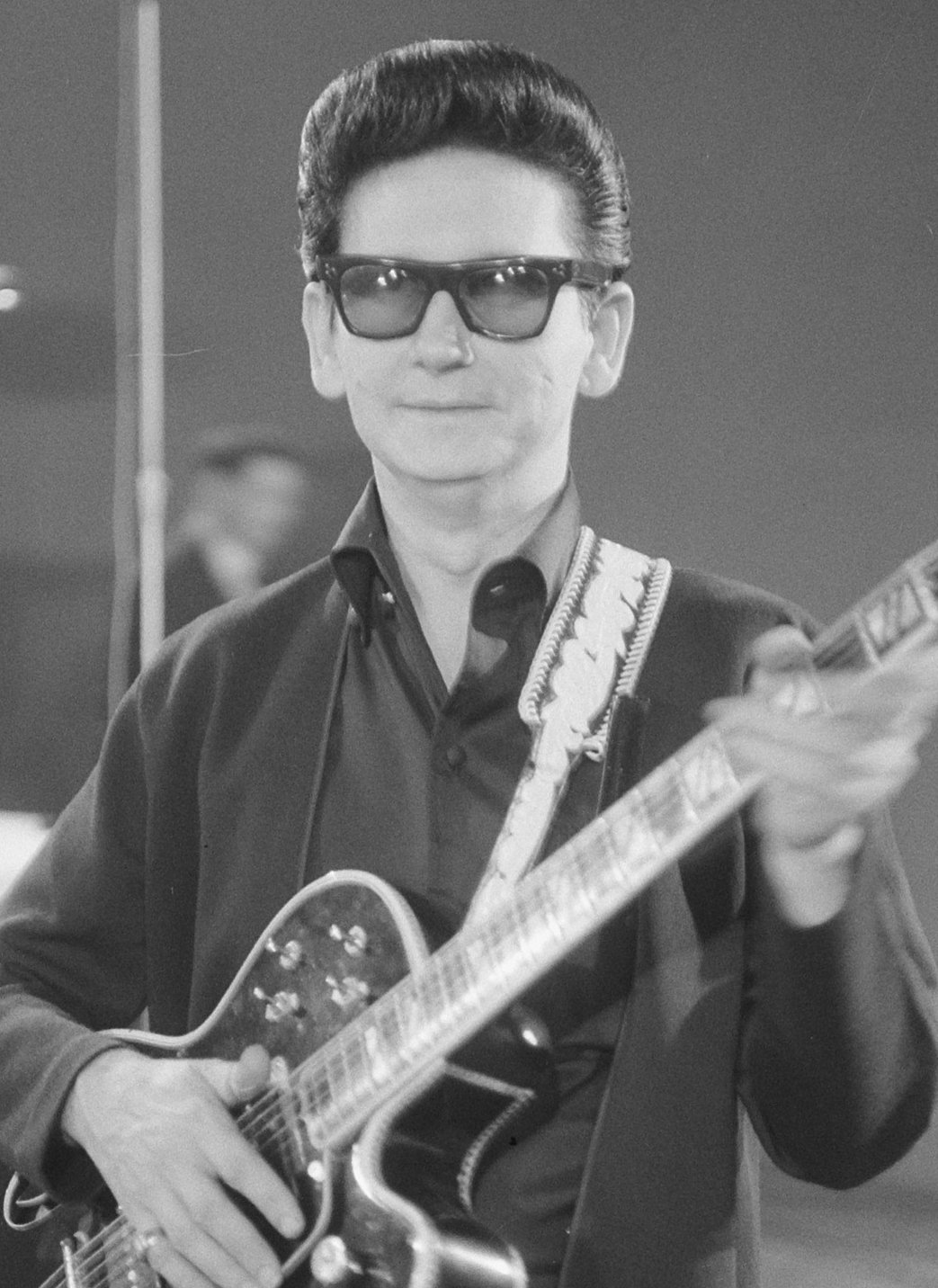
Roy Orbison possessed one of the most distinctive voices in popular music.
Behind the dark glasses came songs filled with loneliness, heartbreak and desperation: “Crying”, “Only the Lonely”, “In Dreams”, “Running Scared” and “It’s Over”.
But some of the tragedy in Orbison’s music would eventually be matched by almost unimaginable events in his own life.
At the height of his career, Roy lost his wife Claudette in a motorcycle accident.
Just over two years later, while he was thousands of miles away performing in England, a fire destroyed his Tennessee home.
Two of his sons were killed.
Somehow, Roy continued.
His commercial fortunes declined, his health later required major heart surgery, and for years he seemed increasingly removed from the centre of popular music.
Then something remarkable happened.
During the final years of his life, Roy Orbison experienced one of rock music’s great career revivals. Bruce Springsteen helped induct him into the Rock & Roll Hall of Fame. Some of the biggest musicians in the world gathered around him for Black & White Night. He joined George Harrison, Bob Dylan, Tom Petty and Jeff Lynne in the Traveling Wilburys.
And Roy recorded a new solo album that would become a major success.
He never lived to see it released.
This is the heartbreaking story of Roy Orbison.
Before the tragedy came extraordinary success
Roy Kelton Orbison was born in Vernon, Texas, on April 23, 1936.
His first significant breakthrough came during the early rock and roll era.
Roy and the Teen Kings recorded “Ooby Dooby”, which eventually brought him to the attention of Sam Phillips and Sun Records, the legendary Memphis label associated with Elvis Presley, Johnny Cash, Jerry Lee Lewis and Carl Perkins.
According to Roy Orbison’s official biography, “Ooby Dooby” reached Number 59 in 1956, but his subsequent Sun releases failed to repeat that success.
For a time, Orbison looked more promising as a songwriter than as a recording star.
Then came Monument Records.
Working with producer Fred Foster, Orbison found the sound that would transform his career.
“Only the Lonely” arrived in 1960.
It reached Number 2 in America and Number 1 in Britain.
Then came “Running Scared”, “Crying”, “Dream Baby”, “In Dreams” and a succession of recordings that sounded unlike much of the rock and roll surrounding them.
The Rock & Roll Hall of Fame notes that “Only the Lonely” began a run of nine Top 10 hits that culminated with “Oh, Pretty Woman” in 1964.
A voice that didn’t sound like anyone else
Part of Orbison’s appeal was obvious from the moment he opened his mouth.
His voice could begin softly and vulnerably before climbing into an enormous, almost operatic climax.
His songs didn’t always follow the obvious pop formula either.
“Running Scared” continually builds towards its final vocal release.
“In Dreams” moves through a succession of musical sections rather than relying on a conventional repeated verse and chorus.
“Crying” gradually increases in emotional intensity until Orbison is singing at the very top of his extraordinary range.
Bruce Springsteen would later describe the unusual power of Orbison’s records when inducting him into the Rock & Roll Hall of Fame.
The Rock Hall describes Orbison’s music as simultaneously vulnerable and powerful, with complex arrangements capable of combining operatic drama with rock and roll rhythm.
And then, in 1964, came the record that became his biggest international hit.
“Oh, Pretty Woman”
Roy Orbison wrote “Oh, Pretty Woman” with Bill Dees.
The song was inspired by Claudette, Roy’s wife.
According to Orbison’s official biography, the single sold around seven million copies and topped charts around the world.
Its opening guitar riff became one of the most recognisable introductions in rock and roll.
For an artist so closely associated with loneliness and heartbreak, “Oh, Pretty Woman” presented something different.
It was confident.
Playful.
Immediate.
Roy Orbison was at the top of his profession.
But behind the success, his relationship with Claudette had been complicated.
They married, divorced and eventually remarried.
Then, in 1966, everything changed.
Roy Orbison loses Claudette
On June 6, 1966, Roy and Claudette were riding motorcycles near Gallatin, Tennessee.
Claudette was involved in a crash and died.
She left behind Roy and their three sons, Roy DeWayne, Anthony and Wesley.
Roy Orbison’s official website describes Claudette’s death as a devastating event that shattered him, saying that he sought refuge in caring for his family and returning to his music.
The Orbison estate’s remembrance of Claudette can be read here.
She had not simply been his wife.
Claudette had been part of Roy’s story before he became an international star.
He had even written a song named after her.
The Everly Brothers recorded “Claudette”, releasing it as the B-side to “All I Have to Do Is Dream” in 1958.
Now the woman behind that song was gone.
Roy was 30 years old.
He had three young boys.
And somehow, he returned to work.
Then came an almost unimaginable second tragedy
Just over two years later, Roy suffered another catastrophic loss.
He was touring in England when devastating news arrived from home.
His house in Hendersonville, Tennessee, had caught fire.
Two of his sons, Roy DeWayne and Anthony King, died in the blaze.
His third son, Wesley, survived.
Roy Orbison’s official biography confirms that two of his three sons were killed in the 1968 house fire.
The Orbison estate has also discussed the period surrounding the tragedy when documenting Roy’s lost album One of the Lonely Ones, which he recorded in the months following the fire.
You can read that history through Roy Orbison’s official site.
In a little over two years, Roy had lost his wife and two of his children.
For a man already famous for singing about loneliness, the reality of his life had become far more devastating than any song.
Roy kept singing
It is difficult to imagine how anyone returns to normality after losses of that scale.
Orbison continued making music.
His commercial career, however, was no longer where it had been during the first half of the 1960s.
Roy had moved from Monument to MGM in 1965.
The deal arrived while he was still one of America’s biggest recording stars, but the years that followed coincided with enormous changes in popular music.
The Beatles and the wider British Invasion transformed the market.
Rock became heavier and increasingly album-focused.
Psychedelia arrived.
By the end of the decade, the musical landscape looked very different from the one in which “Only the Lonely” and “Crying” had become hits.
Roy continued recording prolifically, but the huge singles became less frequent.
The tragedies in his private life unfolded against that professional decline.
Roy found love again
Life did eventually provide Roy with another beginning.
He met German-born Barbara Anne Marie Wellhöner Jakobs.
The couple married in 1969.
They subsequently had two sons, Roy Jr. and Alex.
Together with Wesley, they would eventually become central to preserving their father’s musical legacy.
Roy’s personal life had found greater stability.
His career remained more difficult.
His MGM contract ended in 1973. He briefly recorded for Mercury before eventually returning to Monument.
Then his health became another concern.
Open-heart surgery
Orbison had experienced heart problems, and in 1978 he underwent open-heart surgery.
He was only in his early forties.
For an artist who had already experienced an extraordinary amount of loss before reaching middle age, it represented yet another serious challenge.
But Roy continued performing.
And slowly, something unexpected began happening.
A generation of major musicians who had grown up listening to him were now famous themselves.
They hadn’t forgotten Roy Orbison.
The comeback begins
During the 1980s, Orbison’s music began returning to popular culture.
David Lynch’s Blue Velvet prominently used “In Dreams” in 1986.
The exposure introduced the recording to another generation and helped renew interest in Orbison.
Artists who had been influenced by him were also openly celebrating his work.
Then came 1987.
Roy Orbison was inducted into the Rock & Roll Hall of Fame.
The man chosen to induct him was Bruce Springsteen.
Springsteen had long spoken about Orbison’s enormous influence on his own songwriting and vocal ambitions.
For Roy, the induction represented recognition from a rock establishment that had partly grown out of the music he helped create.
But another extraordinary moment was coming.
Black & White Night
In September 1987, Orbison took the stage at the Cocoanut Grove nightclub in Los Angeles for a television special that became Roy Orbison and Friends: A Black & White Night.
Look at the musicians surrounding him and the scale of Roy’s influence becomes obvious.
Bruce Springsteen.
Elvis Costello.
Jackson Browne.
Tom Waits.
Bonnie Raitt.
k.d. lang.
J.D. Souther.
T Bone Burnett.
James Burton.
These weren’t anonymous backing musicians.
Some were among the biggest artists and most respected players in American music.
And they were there to play Roy Orbison’s songs.
The concert has become one of the defining documents of his late-career revival.
Watch Roy Orbison perform “Oh, Pretty Woman” at Black & White Night
This performance comes from Roy Orbison’s Official Artist Channel and features Bruce Springsteen, Elvis Costello, James Burton, Tom Waits, k.d. lang, Jackson Browne, Bonnie Raitt and the extraordinary band assembled around Roy.
Then came the Traveling Wilburys
Roy’s comeback became even more remarkable in 1988.
George Harrison was working on what would become “Handle with Care”.
The recording brought together Harrison, Jeff Lynne, Tom Petty, Bob Dylan and Roy Orbison.
What began around one song developed into a supergroup.
They became the Traveling Wilburys.
Instead of using their famous names, the five musicians adopted fictional Wilbury identities.
Roy became Lefty Wilbury.
The group’s debut, Traveling Wilburys Vol. 1, was released in October 1988.
It became a major success.
The Recording Academy later awarded the Traveling Wilburys the Grammy for Best Rock Performance by a Duo or Group with Vocal.
Roy Orbison was suddenly not simply being remembered as a star from the 1960s.
He was commercially relevant again.
And there was more to come.
Roy was making Mystery Girl
At the same time, Orbison was recording a new solo album.
Mystery Girl brought him together with musicians and writers including Jeff Lynne, Tom Petty and Bono and the Edge of U2.
One of its songs was “You Got It”.
It sounded unmistakably like Roy Orbison while also fitting naturally into the late 1980s.
Everything seemed to be aligning.
The Rock & Roll Hall of Fame induction had happened.
Black & White Night had reminded audiences how extraordinary his voice remained.
The Traveling Wilburys were a success.
And Roy had a new solo record ready to go.
After years in which the mainstream music business appeared to have moved past him, Roy Orbison was experiencing an extraordinary second act.
Then came one final tragedy.
Roy Orbison dies at just 52
Roy performed what would become his final concert in Highland Heights, Ohio, on December 4, 1988.
Two days later, on December 6, he died following a heart attack.
He was only 52.
The timing was devastating.
Roy had survived the death of Claudette.
He had survived the loss of Roy DeWayne and Anthony.
He had lived through the collapse of his commercial career.
He had undergone open-heart surgery.
And then, just as one of the greatest comebacks in rock history was reaching its peak, he was gone.
The official Roy Orbison biography confirms that his final performance took place on December 4 and that he died two days later.
He never got to see what happened next.
Mystery Girl arrives without him
Mystery Girl was released posthumously in 1989.
It became a major success.
“You Got It” returned Roy Orbison to the US Top 10 for the first time in around a quarter of a century.
The album itself became one of the biggest records of his career.
That makes the ending to Roy’s story especially bittersweet.
He knew people were listening again.
He had experienced the Rock Hall induction.
He had stood surrounded by Springsteen, Costello, Browne and other admirers at Black & White Night.
He had become a Wilbury alongside Harrison, Dylan, Petty and Lynne.
But he never got to watch Mystery Girl complete the comeback.
Why Roy Orbison’s story still hits so hard
Roy Orbison’s life is often described through tragedy, and understandably so.
Few major artists experienced losses of that magnitude in such a short period.
His wife died in 1966.
Two sons died in 1968.
His career declined.
His health deteriorated.
And he died at only 52, immediately before the release of the album that confirmed his return.
But focusing only on what Roy lost misses half of his story.
He kept going.
After Claudette’s death, he returned to his children and his music.
After the house fire, he continued recording.
He eventually remarried and built another family.
After his chart success faded, he continued performing.
After heart surgery, he continued singing.
And when popular music finally rediscovered Roy Orbison, his voice was still there.
That voice remains the reason the story matters.
The voice survived everything
Listen to “Crying” today and the record doesn’t sound like a museum piece.
Neither does “In Dreams”.
Neither does “Only the Lonely”.
And the opening riff of “Oh, Pretty Woman” remains instantly recognisable more than six decades after it was recorded.
Orbison’s songs were often about people who were alone, rejected, frightened or heartbroken.
The cruel coincidence is that the man singing them eventually experienced losses more devastating than most listeners could imagine.
Yet his story did not end with the tragedies of the 1960s.
It ended during a comeback.
Roy Orbison spent years outside the centre of popular music before some of the greatest musicians of the next generation effectively gathered around him and said: this man mattered.
Bruce Springsteen inducted him into the Rock & Roll Hall of Fame.
Springsteen, Elvis Costello, Bonnie Raitt, Jackson Browne, Tom Waits and others backed him on stage.
George Harrison, Bob Dylan, Tom Petty and Jeff Lynne made him a Wilbury.
And a new generation began listening.
Roy died before he could fully enjoy the final chapter.
But he had already seen enough to know he had not been forgotten.
Perhaps that is what makes the story of Roy Orbison so heartbreaking.
It contains almost unbearable loss.
But it also contains survival.
And right at the end, when it appeared the world might have moved on from one of rock and roll’s greatest voices, the world came back.
For more legendary careers, forgotten stories and extraordinary moments from music history, explore The Vault on Behind The Melody.
Discover more important moments from music history in our On This Day archive.
For the latest stories from artists, labels and the wider business, visit Music Industry News.
Or head back to the Behind The Melody Home Page to discover more stories.
Follow Behind The Melody
YouTube: @behindthemelodybtm
TikTok: @behindthemelody
Instagram: @behindthemelody_
Facebook: @btmbehindthemelody
About the Author