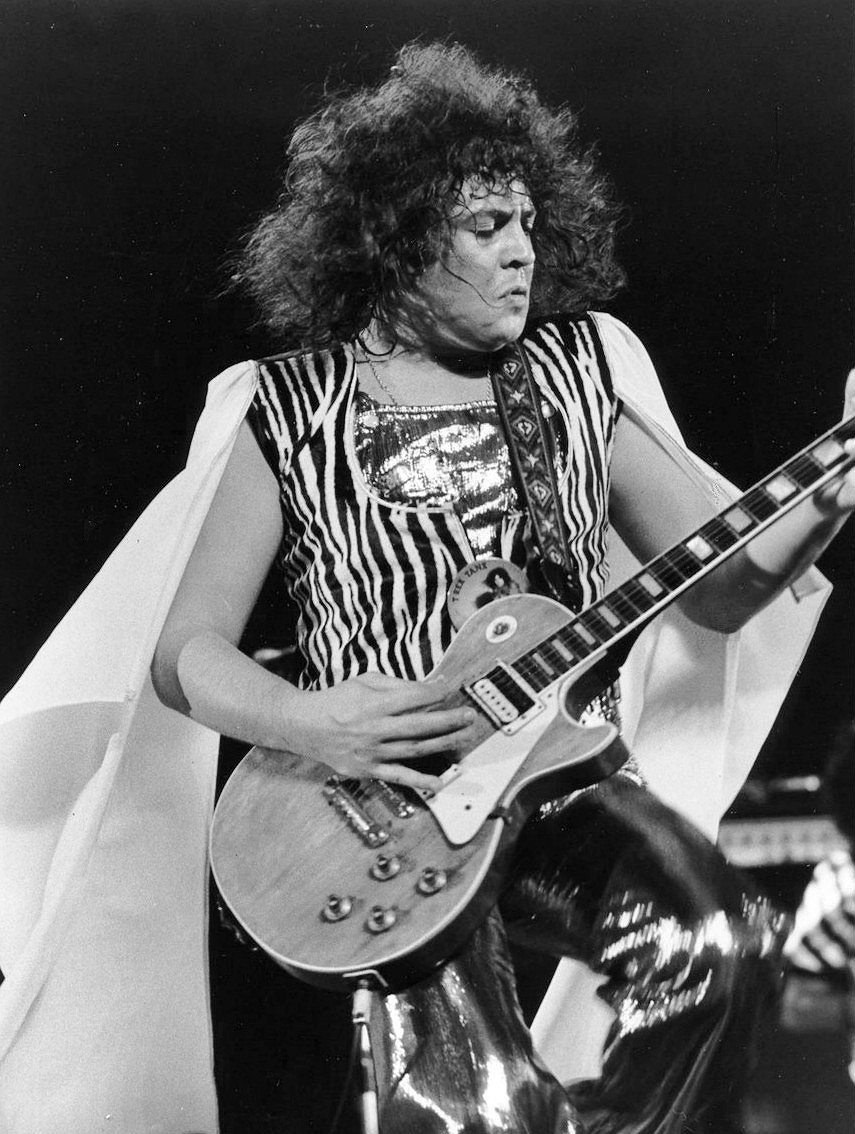
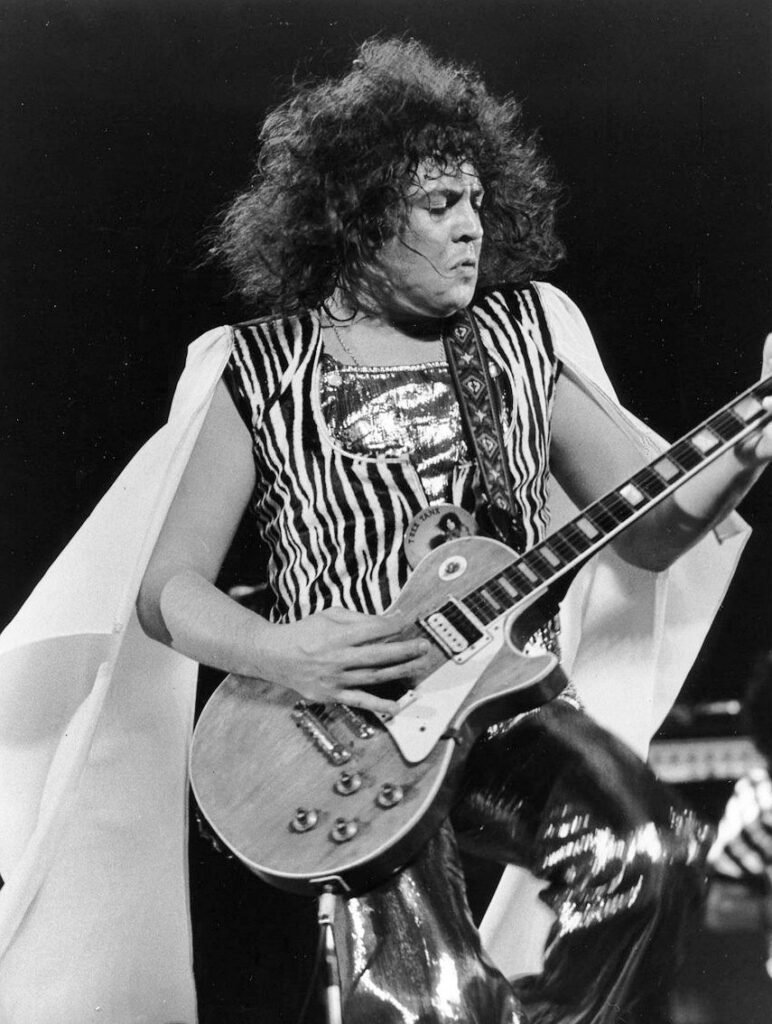
On September 16, 1977, British music lost one of the defining figures of the glam rock era when Marc Bolan died in a car crash in London.
The T. Rex singer, guitarist and songwriter was just 29 years old, only two weeks away from his 30th birthday.
In a remarkably short career, Bolan transformed himself from an underground psychedelic folk performer into one of Britain’s biggest pop stars. With T. Rex, he helped bring glam rock into the mainstream and created records including “Get It On”, “Hot Love”, “Metal Guru”, “Telegram Sam”, “Children of the Revolution” and “20th Century Boy”.
At their commercial peak, T. Rex inspired the kind of fan reaction Britain had rarely seen since The Beatles. The phenomenon even acquired its own name: T. Rextasy.
Almost five decades after Bolan’s death, his records remain part of British popular culture, while T. Rex’s influence has since been formally recognised by the Rock & Roll Hall of Fame.
The crash that killed Marc Bolan
During the early hours of September 16, 1977, Bolan was travelling through southwest London with his partner, American singer Gloria Jones.
Jones was driving a Mini when the car left the road and struck a tree on Queen’s Ride in Barnes.
Bolan was killed in the crash.
He was 29 and would have celebrated his 30th birthday on September 30.
The Official Charts Company records Bolan’s life as September 30, 1947 to September 16, 1977, confirming just how young he was when his career came to its sudden end.
Jones survived the crash.
The tragedy came at an especially interesting moment in Bolan’s career. The enormous commercial heights of T. Rextasy were behind him, but Bolan was finding renewed visibility in Britain and becoming increasingly involved with the new generation of musicians emerging through punk.
He had also returned to British television with his own programme.
From Mark Feld to Marc Bolan
Marc Bolan was born Mark Feld in Hackney, London, on September 30, 1947.
His early career looked very different from the glitter-covered rock star Britain would later know.
After several attempts to establish himself as a performer, Bolan formed Tyrannosaurus Rex in 1967.
Alongside percussionist Steve Peregrin Took, Bolan developed an unusual sound associated with Britain’s psychedelic underground.
The music combined acoustic instrumentation, fantasy, mythology and Bolan’s distinctive vocal style.
Four albums appeared under the Tyrannosaurus Rex name before Bolan shortened it to T. Rex.
More importantly, the music began to change.
Bolan moved towards electric guitar, heavier rhythms and shorter, more direct songs.
That transition would change British rock music.
“Ride a White Swan” changes everything
The breakthrough came in 1970 with “Ride a White Swan”.
The single reached Number 2 on the UK chart.
Within months, Bolan’s transformation from underground performer to pop star was complete.
In 1971, “Hot Love” reached Number 1 and stayed there for six weeks.
Then came “Get It On”.
It became another UK Number 1 and remains one of the recordings most closely associated with Bolan today.
The chart statistics demonstrate just how dominant T. Rex became.
According to the Official Charts Company, T. Rex accumulated four UK Number 1 singles, 11 Top 10 hits and 21 Top 40 singles.
The band’s four chart-toppers were “Hot Love”, “Get It On”, “Telegram Sam” and “Metal Guru”.
T. Rex singles collectively spent 16 weeks at Number 1 and 70 weeks inside the UK Top 10.
The success wasn’t confined to singles.
The band also achieved three UK Number 1 albums and nine Top 10 albums.
For a period during the early 1970s, Marc Bolan was one of the biggest stars in Britain.
Watch T. Rex perform one of Bolan’s defining songs
“Get It On” became T. Rex’s second UK Number 1 and remains one of Marc Bolan’s most recognisable recordings.
Written by Bolan and produced by Tony Visconti, the song spent four weeks at Number 1 in Britain during the summer of 1971.
Watch T. Rex perform “Get It On” below:
Electric Warrior becomes a landmark album
At the centre of Bolan’s extraordinary rise was the 1971 album Electric Warrior.
Featuring “Get It On”, “Jeepster”, “Cosmic Dancer” and “Life’s a Gas”, the album combined elements of Bolan’s earlier songwriting with electric guitars, rock and roll rhythms and producer Tony Visconti’s increasingly sophisticated production.
The album reached Number 1 in Britain.
According to Official Charts, Electric Warrior spent eight weeks at the top, 29 weeks inside the Top 10 and 44 weeks on the chart.
It became one of the records most closely associated with the emergence of glam rock.
Bolan was no longer an underground songwriter who had unexpectedly found himself in the charts.
He had become a genuine pop phenomenon.
Marc Bolan and the rise of glam rock
Bolan’s importance wasn’t limited to songwriting.
His image became almost as influential as the records.
Glitter, flamboyant clothing, satin and an intentionally theatrical presentation became increasingly associated with T. Rex.
The transformation helped establish the visual language of glam rock.
Bolan did not create the entire movement by himself. David Bowie, Roxy Music, Slade, Sweet and other artists would take glam in different directions.
But Bolan became one of its central figures.
The Rock & Roll Hall of Fame describes T. Rex’s music as helping create a new style of rock and roll that influenced generations of musicians.
That influence eventually earned the band induction into the institution in 2020.
Marc Bolan and David Bowie
One of the most fascinating relationships in Bolan’s career was his friendship and rivalry with David Bowie.
The two musicians knew each other before either became a major star.
Both spent years experimenting with different sounds and identities before becoming defining figures of British music during the early 1970s.
Bolan reached mass popularity first.
Bowie’s subsequent transformation through Ziggy Stardust turned him into another central figure in glam rock.
Their paths continued to cross.
Remarkably, one of Bolan’s final television appearances involved Bowie.
By 1977, Bolan was presenting the ITV television programme Marc.
The show combined performances by established musicians with appearances from newer punk and new wave artists.
David Bowie appeared on the final episode.
Bolan and Bowie played together at the end of the programme, although the performance famously ended abruptly when Bolan fell from the stage.
The episode was recorded shortly before Bolan’s death.
Bolan embraced Britain’s punk generation
Bolan’s relationship with punk is one of the more interesting parts of his final year.
By 1977, British popular music was changing rapidly.
The Sex Pistols, The Clash, The Damned and other emerging groups represented a generation very different from the rock stars who had dominated the first half of the decade.
Bolan could easily have dismissed the movement.
Instead, he gave some of its musicians valuable exposure.
The Damned supported T. Rex during the Dandy in the Underworld tour in 1977.
His Marc television programme also provided opportunities for newer performers to appear alongside established names.
It suggested that Bolan was not content simply to rely on his early 1970s reputation.
At 29, he was still paying attention to where British music was heading next.
His final album
T. Rex released Dandy in the Underworld in March 1977.
It became the final T. Rex studio album released during Bolan’s lifetime.
The record reached Number 26 in Britain.
Its release and accompanying tour came as Bolan attempted to establish a new chapter after the extraordinary commercial heights and subsequent decline of the T. Rextasy period.
He would never have the opportunity to discover where that chapter might lead.
Only six months after the album appeared, Bolan was dead.
A catalogue that never disappeared
Bolan’s death froze his career at the age of 29, but his records continued to find audiences.
“Get It On” remains one of the most recognisable British rock recordings of the 1970s.
“20th Century Boy” became another enduring T. Rex song.
“Cosmic Dancer”, despite never being one of the band’s original blockbuster UK singles, developed a substantial reputation of its own.
T. Rex compilations have also repeatedly returned Bolan’s music to the British charts.
The 1985 collection Best of the 20th Century Boy reached Number 5.
The Ultimate Collection reached Number 4 in 1991.
Decades after Bolan’s death, the Gold compilation reached the UK Top 10 in 2018.
That continuing chart presence demonstrates something important about Bolan’s legacy.
His catalogue was not confined to audiences who had experienced T. Rextasy first-hand.
The songs continued being repackaged, rediscovered and heard by subsequent generations.
T. Rex enter the Rock & Roll Hall of Fame
More than four decades after Bolan’s death, T. Rex received one of rock music’s major institutional honours.
The band was inducted into the Rock & Roll Hall of Fame as part of the class of 2020.
Marc Bolan, Mickey Finn, Steve Currie and Bill Legend were the members formally recognised.
The same induction class included Whitney Houston, Depeche Mode, The Doobie Brothers, Nine Inch Nails and The Notorious B.I.G.
For T. Rex, it represented formal recognition of an influence that had already been evident for decades.
Remembering Marc Bolan on September 16
What makes Marc Bolan’s story particularly remarkable is how quickly everything happened.
“Ride a White Swan” broke into the UK Top 10 in 1970.
Bolan died in September 1977.
In between came four Number 1 singles, three Number 1 albums, screaming audiences, T. Rextasy, Electric Warrior, glam rock and a catalogue that would continue being heard for generations.
His career at the highest level lasted only a fraction of the time enjoyed by many of his contemporaries.
Yet Bolan helped change both the appearance and sound of British rock music.
He brought together the simplicity of early rock and roll, distinctive guitar riffs, fantasy, sexuality, fashion, theatricality and direct pop songwriting.
The statistics provide one measure of what he achieved.
Four UK Number 1 singles.
Eleven Top 10 hits.
Three Number 1 albums.
But Bolan’s longer legacy can be found in the musicians and movements that followed him.
The Rock & Roll Hall of Fame eventually recognised T. Rex as one of the groups whose distinctive approach helped influence generations of artists.
On September 16, 1977, Marc Bolan’s life ended just two weeks before his 30th birthday.
Nearly half a century later, the music that made him one of Britain’s defining stars of the 1970s remains very much alive.
For more daily milestones in music history, explore our On This Day archive.
Dive deeper into legendary recording sessions and artist turning points inside The Vault.
Stay updated with breaking developments and current headlines in Music Industry News.
Or return to the main Behind The Melody Home Page to browse the full archive.
Follow Behind The Melody
YouTube: @behindthemelodybtm
TikTok: @behindthemelody
Instagram: @behindthemelody_
Facebook: @btmbehindthemelody
About the Author